Work with people you respect
Choose clients and projects where your judgement is genuinely valued.
Executive Nomad Life is for experienced professionals who want more freedom, more purpose and more control without throwing away everything they have spent decades learning.
Promotions, larger teams, bigger salaries and better titles can feel like progress for years. Then one day the same path starts to look less like ambition and more like repetition.
The question is not whether you have been successful. The question is whether success still means the same thing to you now.
The reward no longer justifies the cost.
Everything meaningful is pushed into evenings, weekends and someday.
Retirement feels too final. Another corporate role feels too familiar.
The vision is clearer than the route.
A business built from your experience can create a different relationship with work. Fewer clients. Better work. More control. A calendar with air in it.
Choose clients and projects where your judgement is genuinely valued.
Design the workload to fit your life rather than forcing life around the workload.
Base yourself where you feel most alive, whether that means travel or simply staying put.
Build a market position that exists independently of a job title.
Sell judgement, perspective, access and outcomes.
Create work that allows you to decide where and how life happens.
Build a portfolio of clients, assets and opportunities that strengthens over time.
Very few people spend thirty years building judgement, relationships and capability because they secretly want to become irrelevant.
Most want something more nuanced: meaningful work without corporate dependency, income without constant pressure, contribution without surrendering the whole calendar.
Years of decisions, results, mistakes, recoveries and lessons.
Trust earned through responsibility, not manufactured through personal branding.
A network built across clients, teams, sectors and countries.
The ability to see what matters before less experienced people can.
Calm, context and judgement when the answer is not obvious.
The evidence and experience that make your ideas credible and memorable.
What does a good ordinary day look like? Not the holiday. Not the fantasy. The Tuesday you would be happy to repeat.
What kind of place gives you energy, calm or inspiration?
What kind of client makes your experience feel useful rather than depleted?
How many calls, projects and obligations would still leave room for life?
What level of income creates choice without rebuilding the same pressure?
Which relationships deserve more space than your current working life allows?
A permanent base, seasonal living, regular travel or simply the option to choose?
You may want three months in Italy, winter somewhere warm, a base in Bulgaria, time near family or simply the ability to work from home without negotiation.
A location independent business can support a rhythm of living rather than permanent travel.
The point is not that you must travel. The point is that work no longer decides for you.
The right offer, delivery model and positioning can make expertise portable.
Intense work, lighter periods, travel, family and creative projects can coexist by design.
Executive Nomad is not about becoming the richest person in the room. It is about becoming the person whose life contains the most deliberate choices.
To live well, plan confidently and avoid dependency on one client or employer.
To protect health, relationships, curiosity and the parts of life work once crowded out.
To remain useful, challenged and connected without rebuilding the old treadmill.
Consulting can become a framework. A framework can become a workshop. A workshop can become a book, programme, community or intellectual property asset.
The business starts to compound instead of resetting every month. You are no longer simply selling another block of time.
Direct access to your judgement and experience.
Helping others move faster through problems you already understand.
Turning repeatable knowledge into structured delivery.
Building authority and assets that continue working beyond one client engagement.
“Freedom is not something you retire into. It is something you build while you are still capable of enjoying it.” Jamie Sylvian, Founder of Executive Nomad
The aim is not to stop contributing. It is to stop relying on a single employer, a single location or a single income source to create the life you want.
Work where you are valued. Live where you are inspired. The order matters.
Not the one your current career path assumes you should want.
The experience, credibility and relationships you already own.
A focused, client led route that can be tested before you overbuild anything.
An Executive Nomad is an experienced professional who has built a consulting, coaching, mentoring or advisory business that can operate independently of one employer or one fixed location.
No. Executive Nomad is built around expertise, client value and professional independence. Travel is optional. The essential idea is choice.
Often, your age and experience are the commercial advantage. The task is to package that experience around a clear client problem.
Not necessarily. Subject to your contract and obligations, many people research, position and validate a new offer before making a full transition.
Not really. It is about designing work that supports the life you want next, whether that means full time independence, semi retirement or a portfolio career.
Yes. Consulting, advisory, mentoring, teaching and portfolio businesses can often be designed around remote or hybrid delivery.
Book a call and map how your existing experience could become a flexible, location independent business built around your next chapter.
Jamie Sylvian has lived the 'Executive Nomad' lifestyle for 3 decades.
While calling 13 countries 'home', Jamie has operated a location independent business, operating at executive and board level for global brands like British Gas, London Electricity, Bet Victor, Casey Research and numerous Private Equity houses.Jamie was a Co-Founder of the marketing business that became Uswitch.com, sold for £210m in 2006.

This is Where You get 100% clarity.
Rewire. Repackage. Repurpose.
This is your starting point. Built from over 30 years in global consulting, coaching, mentoring workshops and fractional Director projects, The Executive Nomad operating system, by Founder Jamie Sylvian is your starting point on the journey.

Rewire. 60 Minutes
Rewire is all about extracting the value you've built up in your career and working out how to monetize that value. We work out exactly what you can offer into the marketplace.
Goal: Your Offer is 100% locked in

Repackage. 60 Minutes
Becoming just a 'Consultant' or 'Coach' isn't enough. In this session we give your rewired offer a name, a brand and a unique position. You'll stand out in a crowded market:
Goal: You Become a Category of 1
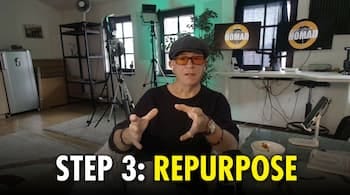
Repurpose. 60 Minutes
In the third and final session, we work on repurposing your offer/s to work seamlessly across sectors and geographies to diversify and protect your income streams.
Goal:You Becoming a Global Brand

Audio and Video Coaching
Some people prefer audio while driving or walking the dog. Others like to dive in to a video and watch every step unfold. We have both.
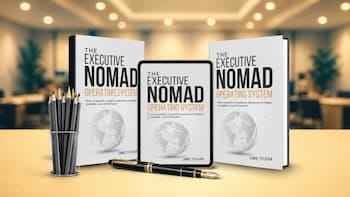
The Operating System
The Executive Nomad operating system takes you step by step through the entire process. You'll get absolute clarity based on 30 years of running a location independent business.

Operational Frameworks
We've built a series of workbooks that will walk you through the process of setting up. The 1:1 gives you clarity, the workbooks give you the 'what's next'. Checklists, AI prompts, all designed to get you up and runningquickly.
Testimonials

"Practical insights clearly based on real experience. A wise counsel."
Tapiwa Manjengwa
MD Crescenval Enterprises

" He brings an impressive blend of strategic thinking, empathy, and innovation to the table, with a way of cutting through the noise and providing clarity and direction. ”
Matt Gurney
Now in the Agri-tech sector

Jamies strategies helped introduce us to over $100 million in financing and IPO opportunities for our Private Equity company.
Perry M Anderson
Perry M. Anderson: Author of RED TO BLACK: THE ART OF CORPORATE TURNAROUND

"Jamie helped me solidify my thinking around branding. He offered suggestions on how to launch and bring in initial clients. With re-purposing this led to ways to grow my consulting business post-launch"
Debra Mitchell
Clinical Research Advisor and Consultant

"Jamie has been there and done it on a grand scale and his guiding hand in leading with a clear no nonsense strategy focusing on results in a pleasant reassuring manner gives me the confidence that I am in safe hands”
Steve Hunt
Ex Construction Industry

" I know that I can approach Jamie directly at any time with any challenges or ideas.I think Jamie is going to be hugely influential on our success moving forwards in what is proving to be a very exciting opportunity!
Chris White
Ex Print & Media
You: an Executive Nomad
Our Training, Branding and Eco-System Position You As;

Strategy Consulting
There are thousands of Corporates looking for fractional expertise. That's your way in.

Workshops
Those wins, losses and Lessons that crafted your career? Perfect for online workshops to groups.

Executive
Coaching
Imagine coaching the next generation of Executives. Their youth and energy, your guidance and steady hand.

Non -Executive Roles
Imagine guiding five to ten growing companies to greater things. You choose your clients your times and your fees.

Executive Mentoring
How about mentoring a start-up CEO to grab opportunities and side-step the landmines? You've done it yourself. Now lead the way.

Public Speaking
Public Speaking isn't for everyone, but if it's a fit for you, it's a highly paid way to leverage your sector expertise around the world.
Not only can you — it's arguably the smartest time to do it. Twenty or thirty years inside major organisations gives you something most business owners never have: real pattern recognition. You've seen what works, what fails, and why. You've sat in the rooms where decisions get made. That's not just experience — it's a product.
The shift most executives miss is this — you're not starting from zero. You're repackaging what you already know into a form the market will pay for directly — without a company name above the door lending it credibility. That adjustment takes work, but the raw material is already there.
The executives who struggle aren't the ones who lack the skills.
They're the ones who try to replicate their corporate role as a freelancer, rather than building a proper business around their expertise.
Executive Nomad exists specifically for this transition — to help you rewire your thinking, repackage your experience, and build a consulting business that works on your terms, from anywhere.
The answer sits in three moves — and most executives only make one of them.
The first is Rewire. Before anything else, you need to shift how you see yourself. You're no longer an employee with a specialism — you're an expert with a market. That's a fundamental identity shift, and skipping it is why so many corporate-to-consultant transitions stall in the first six months.
The second is Repackage. Your experience needs to be translated into offers the market understands and will pay for. That means defining your niche, naming your methodology, and building a suite of services — consulting, coaching, workshops, advisory roles — that extract maximum value from what you already know.
The third is Repurpose. Your knowledge needs to work harder than you do. Content, frameworks, lead magnets, digital products — these are how you build a business that generates interest while you sleep, rather than one that only moves when you're actively selling.
Twenty years of corporate experience is the raw material. These three moves are how you turn it into a practice.
There's no single answer — but there is a right framework for finding yours.
Most senior executives going independent have five models available to them. The mistake is picking one and ignoring the rest, when the real opportunity is in combining them intelligently.
Strategy Consulting is the most obvious move — you're paid for your thinking, your frameworks, and your ability to solve problems others can't. High value, high margin, but requires active client delivery.
Coaching shifts the dynamic — instead of solving problems for clients, you develop their capacity to solve problems themselves. It's scalable, repeatable, and increasingly in demand at the executive level.
Mentoring is relationship-led and often leads to long-term engagements. If you've built and scaled businesses, there's a generation of leaders who will pay to access that lived experience directly.
Workshops turn your methodology into a product. One framework, delivered to multiple clients — the same effort, multiplied returns.
Executive Portfolio Roles — non-executive directorships, advisory board seats, fractional C-suite positions — offer prestige, network access, and income that doesn't require you to sell constantly.
The strongest independent businesses combine at least three of these. That's not complexity — that's resilience.
It's not just not too late — it's arguably the ideal time.
Here's what most business advice gets wrong. It's written for people in their 20s and 30s — people with energy, appetite for risk, and not much else. The hustle-hard, fail-fast, figure-it-out-as-you-go model works when you have time to burn and little to lose.
You don't need that model. You have something far more valuable — a track record, a network, and decades of hard-won pattern recognition that younger entrepreneurs will spend the next twenty years trying to acquire.
The statistics back this up. The average age of a successful founder at the time of their company's breakout is 45. The highest-performing entrepreneurs — measured by revenue growth and business longevity — skew older, not younger. Experience compounds in ways that energy simply cannot.
What your 50s give you that your 30s didn't — clarity on what you're good at, credibility that opens doors without cold pitching, a network built on real relationships, and the judgment to avoid the mistakes that derail younger founders.
The question was never whether it's too late. The question is whether you're willing to stop waiting for the right moment — and start building.
More than you think — and almost certainly more than you're currently planning to.
The most common mistake executives make when pricing their consulting is anchoring to their corporate salary. They divide their annual package by working days, add a small premium for being independent, and arrive at a day rate that feels bold but is actually a significant undercharge.
Here's the reframe — clients aren't paying for your time. They're paying for the outcome your time produces. A strategic intervention that saves a company £2 million — or $2.5 million, or €2.3 million — in restructuring costs isn't worth a standard day rate. It's worth a percentage of the value created.
The market for senior independent consultants is broader than most realise. Day rates for experienced strategy consultants run from £1,500 to £5,000 / $1,800 to $6,500 / €1,700 to €6,000 — with specialists in high-demand sectors commanding more. Retainer models — where clients pay a fixed monthly fee for access and ongoing advisory — typically range from £3,000 to £15,000 / $4,000 to $19,000 / €3,500 to €17,500 per month. Project fees for defined-scope engagements can run to six figures in any currency.
The variable isn't your experience — it's your positioning. A generalist charges for time. A specialist with a named methodology and a clear client outcome charges for transformation.
Get the positioning right, and the pricing question largely answers itself.
The board-level market is less mysterious than it appears — but it's more relationship-driven than most executives expect.
Depending on where you are in the world, the role goes by different names. In the UK and Australia it's a Non-Executive Director (NED). In the US and Canada it's an Independent Director or Board Director. Across the EU you'll hear Supervisory Board Member, Independent Administrator, or Non-Executive Board Member depending on the country and governance structure. The title differs — the function is largely the same: strategic oversight, governance, and bringing independent thinking to the boardroom.
And regardless of geography, it's not something you apply for in the traditional sense. It's something you're invited into — which means the path to the boardroom runs through your network, your reputation, and your visibility, not through job boards.
That said, there's a clear progression that work well in Irelands.
Get your house in order first. Your board proposition needs to be crisp — what sector experience do you bring, what board-level challenges can you speak to, and what's your track record of operating at that level? A CV that reads like an executive CV won't cut it. You need a board biography that positions you as a strategic asset, not a functional one.
Then activate your network deliberately. Most Irish board appointments come through people who already know you — former colleagues, investors, advisors, professional services contacts. The conversation isn't "I'm looking for a board role." It's "I'm moving into a portfolio career and I'm selectively exploring board-level opportunities — if you hear of anything that fits, I'd value an introduction."
Build visible credibility in parallel. Speaking at industry events, writing on LinkedIn, joining professional associations — these create the ambient reputation that makes you easier to recommend when a seat opens up.
The opportunity is real — and significantly underutilised by executives who assume the door is closed to them.
Most executives use these three words interchangeably. The market doesn't — and neither should you.
Getting this distinction right matters for two reasons. It shapes how you position yourself to clients. And it determines how you price, structure, and deliver your work.
Consulting is problem-led. A client has a specific challenge — a restructure, a market entry, a strategy gap — and they hire you to solve it. You bring the expertise, the methodology, and the answer. The client pays for the outcome. Consulting engagements are typically project-based, time-bounded, and priced accordingly. Day rates in the UK run £1,500 to £5,000 / $1,800 to $6,500 / €1,700 to €6,000. In Australia AUD $2,000 to AUD $7,000. In Canada CAD $2,000 to CAD $7,500.
Coaching is potential-led. You're not there to solve the problem — you're there to develop the client's capacity to solve it themselves. A good executive coach asks better questions than they give answers. The engagement is ongoing, relationship-driven, and focused on mindset, performance, and growth. Executive coaching retainers typically run £2,000 to £8,000 / $2,500 to $10,000 / €2,300 to €9,000 per month — with top-tier coaches in high-demand markets commanding significantly more.
Mentoring is experience-led. You've walked the road the client is trying to walk — and they're paying to access your lived experience directly. It's less structured than coaching, more conversational, and often built on a longer-term relationship. Mentoring is frequently underpriced by executives who don't recognise the premium the market places on genuine, been-there experience. Monthly retainers typically range from €1,500 to €5,000 / $2,000 to $6,500 / €1,800 to €6,000 — in Australia AUD $2,500 to AUD $7,000 / Canada CAD $2,500 to CAD $7,500.
The strongest independent practices don't pick one — they build all three into a suite of offers that serve clients at different stages and price points. That's not confusion — that's a business model.
It's the question every executive asks — and the honest answer is: it depends almost entirely on what you do in the first ninety days.
The executives who take twelve to eighteen months to gain traction are usually the ones who spent the first three months perfecting their website, agonising over their niche, and waiting to feel ready. The ones who replace their income in three to six months are the ones who started having conversations before they felt ready — and closed their first client before their business card was printed.
That said, here's a realistic picture of what the journey looks like.
Month one to three is the foundation phase. You're clarifying your offer, identifying your first ten target clients, and activating your existing network. Revenue in this phase is possible — often from former colleagues, employers, or contacts who already know your value — but it's not guaranteed. Expect one to two clients at reduced rates as you build confidence and case studies.
Month three to six is the traction phase. With a clear positioning, an active LinkedIn presence, and a small roster of early clients, referrals start to move. This is where most executives land their first properly priced engagement — and where the income curve begins to steepen.
Month six to twelve is the acceleration phase. Systems are in place, positioning is proven, and the pipeline is active. Executives with a structured approach — a defined methodology, a lead magnet, a consistent content presence — are typically at or approaching corporate salary equivalence by month nine.
What does corporate salary equivalence actually look like in consulting terms?
A £120,000 / $150,000 / €140,000 corporate salary requires roughly:
Two to three consulting retainer clients at £4,000 to £5,000 / $5,000 to $6,500 / €4,500 to €6,000 per month, or
Eight to ten coaching clients at £1,500 / $2,000 / €1,800 per month, or
A blended model — one anchor retainer, three to four coaching clients, and a workshop or two per quarter
The math works. The variable is always the same — how quickly you're willing to move.
The short answer is no — but the slightly longer answer is that you'll almost certainly want one, and sooner than you think.
Most independent consultants start as sole traders — or their local equivalent — because it's the path of least resistance. No registration fees, no separate accounting, no additional compliance. You invoice under your own name, you pay income tax on what you earn, and you get started. For the first few months, while you're finding your feet and landing early clients, this is perfectly reasonable.
But as your income grows, the sole trader model starts to cost you money.
Here's how the structures break down globally — and what each means for you in practice.
United Kingdom — A Private Limited Company (Ltd) is the standard vehicle for independent consultants. Corporation tax is currently lower than the higher rate of income tax, and the ability to pay yourself through a combination of salary and dividends is a legitimate and widely used tax efficiency. Formation costs are minimal — Companies House registration is £12 online. Most consultants make the switch once they're consistently billing £3,000 to £5,000 per month or more.
United States — The equivalent structures are the LLC (Limited Liability Company) and the S-Corporation. The LLC is the most common starting point — straightforward to form, flexible in how profits are taxed, and offering personal liability protection from day one. Formation costs vary by state, typically $50 to $500. As income scales, many US consultants elect S-Corp status for the payroll tax savings. Speak to a CPA before making that call.
Canada — Incorporation at the federal level through Corporations Canada or at the provincial level is the standard route. A Canadian Controlled Private Corporation (CCPC) offers significant tax advantages as income grows — including the small business deduction, which reduces the corporate tax rate on the first CAD $500,000 of active business income. Federal incorporation costs CAD $200 online.
Australia — A Proprietary Limited Company (Pty Ltd) is the most common structure for independent consultants. It offers liability protection and more tax-efficient profit distribution through dividends as income scales. ASIC registration costs AUD $538 for a standard company. Many Australian consultants also use a discretionary family trust structure for additional flexibility — worth discussing with an accountant early.
European Union — Structures vary significantly by country. In Germany the UG (Unternehmergesellschaft) or GmbH are the standard vehicles. In France the SASU or EURL. In the Netherlands the BV. In Ireland the Private Limited Company (Ltd) mirrors the UK model closely. Each carries different capital requirements, compliance obligations, and tax treatment — local advice is essential.
The universal principle across all markets — liability protection and tax efficiency are the two reasons to incorporate, and both become more valuable as your consulting income grows. The question isn't whether to do it. It's when.
When in doubt — start lean, move fast, and get a good accountant before your first big invoice lands.
Most executives waste them. Not through laziness — through overthinking.
They build elaborate business plans, research competitors, redesign their LinkedIn profile seventeen times, and convince themselves they're making progress. They're not. They're delaying the moment of exposure — the point where the idea meets the market and either holds up or doesn't.
Here's what the first thirty days should actually look like.
Days one to seven — Rewire.
Before you touch your website, your business cards, or your pricing, do the internal work. You are no longer an employee. You are no longer defined by your title, your company, or your organisational rank. You are an expert with a market — and your job from this point forward is to serve that market directly. This shift sounds simple. It isn't. Give it the time and deliberate thought it deserves.
Write down the three problems you have solved repeatedly throughout your career. Not job titles — problems. Those three things are the beginning of your consulting proposition.
Days eight to fourteen — Repackage.
Take those three problems and build a rough offer around each one. Who has this problem? What does it cost them if it goes unsolved? What would it be worth to solve it? What would you charge to solve it?
You don't need a polished deck. You need a one-page articulation of what you do, who you do it for, and what they get. That's your first offer. It will evolve — but it needs to exist before you can test it.
Update your LinkedIn profile to reflect your new positioning — not your old corporate history. Your headline should speak to the client you're targeting, not the employer you've left. This is one of the highest-leverage thirty minutes you'll spend in the entire month.
Days fifteen to twenty-one — Repurpose.
Make a list of every person in your network who could either hire you, refer you, or introduce you to someone who could. Not a vague mental list — an actual list, in a spreadsheet, with names and context.
Then start having conversations. Not pitches — conversations. "I've just gone independent and I'm building something around [your niche]. I'd love twenty minutes to get your perspective." Most people will say yes. Some of those conversations will turn into clients. All of them will sharpen your thinking.
Write one piece of content for LinkedIn this week. One. Something that demonstrates your thinking on a problem your ideal client is wrestling with right now. Post it. See what happens.
Days twenty-two to thirty — Activate.
By now you should have had at least ten conversations, refined your offer based on what you heard, and have at least one or two people who've expressed genuine interest. Now you close.
Ask for the business. Not aggressively — but directly. "Based on what you've told me, I think I can help. Here's what that would look like and here's what it costs. Does that make sense as a next step?" Most executives find this the hardest part. Do it anyway.
If you've done this — really done it, not just thought about it — you will end your first thirty days with more momentum than most consultants generate in six months.
The corporate world trained you to be patient, process-driven, and risk-averse. Your first thirty days as an independent consultant require the opposite — speed, directness, and a willingness to be seen before you feel ready.
Thirty days. Ten conversations. One offer. One piece of content. One closed client.
That's the brief.
Lorem ipsum dolor sit amet, consectetur adipisicing elit. Autem dolore, alias, numquam enim ab voluptate id quam harum ducimus cupiditate similique quisquam et deserunt, recusandae.
Executive Nomad is a global, borderless website, brand & category. Find us all around the world.
Disclaimer: Our models are built on the strategies and frameworks of Jamie Sylvian, who is a three decades globally focused strategists, digital nomad, author, podcaster and founder of the Executive Nomad movement. DecodedAI & RewireAI are artificially intelligent models and not a real person. AI models occasionally produce false or misleading information. Executive Nomad Ltd takes no responsibility for the results of this AI model, so please exercise due caution and seek professional advice where necessary. Working with RewireAI means you will be added to our newsletter list but you can unsubscribe at any time.
Executive Nomad is a global, borderless website, brand & category. Find us all around the world.
Europe
United States
Canada
United Kingdom
Suite 4 2nd Floor The West Wing
Montarik House 3 Bedlam Court
GX11 1AA Gibraltar
24 City Road
London
EC1V 2NX
+35 989 500 98 13
+1 (516) 755-7573
+1 (647) 370 1126
+44 (0)20 4578 9164
Disclaimer: Our models are built on the strategies and frameworks of Jamie Sylvian, who is a three decades globally focused strategists, digital nomad, author, podcaster and founder of the Executive Nomad movement. DecodedAI & RewireAI are artificially intelligent models and not a real person. AI models occasionally produce false or misleading information. Executive Nomad Ltd takes no responsibility for the results of this AI model, so please exercise due caution and seek professional advice where necessary. Working with RewireAI means you will be added to our newsletter list but you can unsubscribe at any time.
Your Expertise
/Decoded
I HATE spam too. Your email address is 100% secure
